by admin | Feb 11, 2015 | Uncategorized
 While recently standing in the CVS checkout line amid piles of Valentine schlock, my son–an inquisitive little guy–asked a question that most of us have surely pondered in our lifetimes. “Mom,” he said in a loud voice, “why do we need Valentine’s Day? I mean, aren’t we supposed to love everyone every day?”
There I was, surrounded by suddenly curious drug store customers, at a rare loss for words. Just a few days before I had (purely by coincidence) taken the question to Facebook: Is Valentine’s Day just a Hallmark-induced holiday, or does it mean something? Predictably the responses ran the gamut. Some relish the opportunity to show their special someone demonstrative love. Others consider Valentine’s Day little more than a contrived money-making boondoggle. A few people were sensitive to those who wouldn’t receive a Valentine–and how hurtful that could be.
So when my son asked the question, I was somewhat prepared.
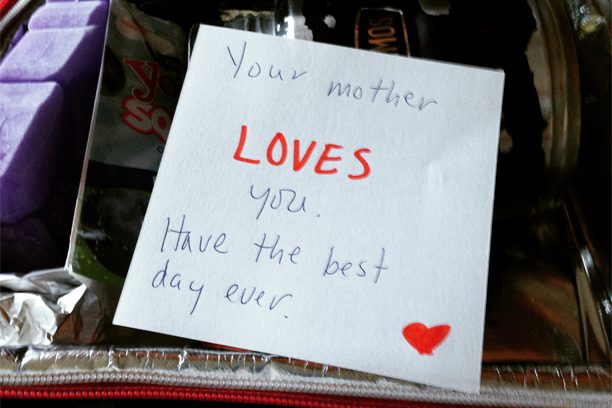
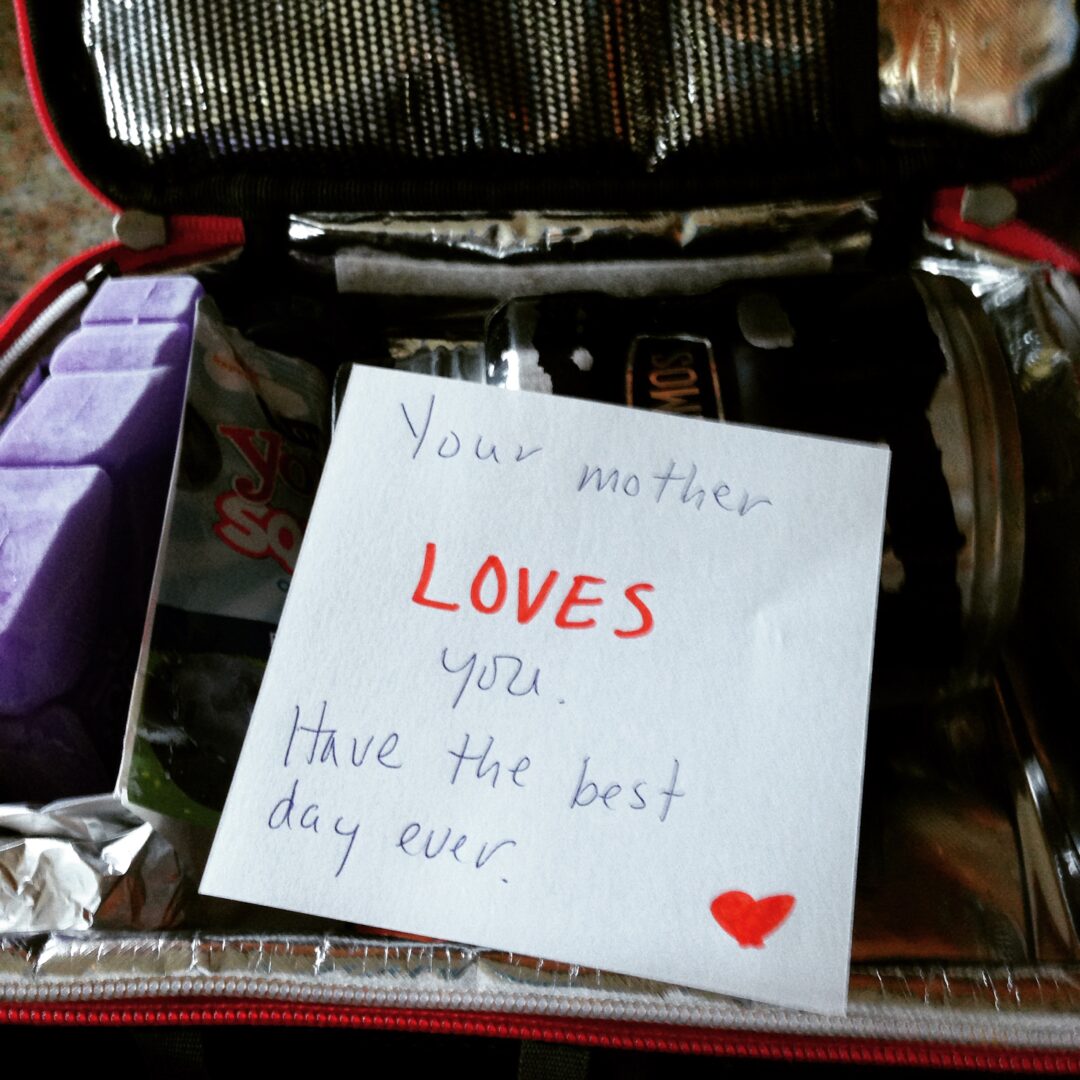
Every year, on the night before Valentine’s Day, my husband and I decorate our kids’ rooms while they sleep. There are hearts and streamers. There are homemade messages strewn atop their furniture. We stick hearts in their underwear drawer and hearts in their lunchboxes. Balloons hang in the air. They get a special breakfast and I usually send them off to school with a hug and a bigger-than-usual “I love you!”
We love doing it, and they love it too.
At its best, Valentine’s Day is a reminder to recognize the loves in your life. It doesn’t have to be formulaic or mandated from large corporate interests. And just because those corporate interests exist doesn’t mean we have to scrap the entire holiday (If we did that, we would also have to do away with Christmas, Easter, Mother’s and Father’s Day).
Back when I was a girl my dad would come home from work on Valentine’s Day armed with a giant Hershey’s Kiss or a bouquet of flowers. It was the only time I received flowers or chocolate and it was special. As I grew older I had myriad Valentine’s Days without a Valentine. Many years were spent searching for the perfect Valentine and Valentine’s Day card, dinner, gift, etc. Some years were great and some were lonely.
But the bottom line is that sometimes people do need a reminder. We can get so busy we forget to appreciate the people we love. And there’s an oft-overlooked beauty in making the day special for someone else.
So with all this in my heart I asked my son a question in response to his question. “Yes,” I said, “it is true we should be kind and generous all the time. But what’s the harm in stepping up the game one day a year?”
To that, he had no answer. I told him I loved decorating his room and making the day a special day. I asked if he thought we could still do that. With a smile on his face he said we could. We went to pay for his Valentine’s cards for his classmates. The man at the register complimented my son for being a deep thinker and I smiled.
I focused on the joy I will try to bring to someone’s day on Valentine’s day. I don’t feel off the hook from treating people with love and kindness the rest of the year either. In fact, I feel more inspired.

by admin | Jan 12, 2015 | Uncategorized

Twenty years before my first child was born, my sister, Leah, and I traveled to Thailand together. We discovered a colloquialism that seemed ubiquitous to the country: Same same but different. Here is an example of how the words were employed. In a restaurant I order an orange. The waiter brings me kumquats. I say, “Um, I ordered an orange. These are kumquats.” The waiter responds, “Same same, but different.”
The saying was always greeted with a quizzical look from my sister and me. On the surface it doesn’t make any sense. How the heck can things be the same and also different?
Now, as a parent, I think of “same same but different” in a whole new light. Parents often use a one-size-fits-all approach with their children. Two kids take cookies without asking, and Mom and Dad punish them identically. No dessert for a week. You have two sons. They both get in scuffles on the schoolyard. Both received stern talking-tos and no TV for a week. This is how parents generally work. A punishment is a punishment is a punishment. The temperaments and personalities of the individual children are not considered.
But kids do not emerge from a one-size-fits-all box, and they often require very different responses to life’s challenges than their siblings.
I was reminded of this after listening to an episode of the This American Life podcast. The subject was regret. As a child Elna Baker was caught whacking her sister over the head with a broom. Her father–who would have simply punished his other children–instead decided the best route would be to conduct a mini-trial. Elna held steadfast that she didn’t commit the act on purpose. Instead of punishing Elna, her father did nothing. He let her get away with it. He figured that would be a more effective punishment for Elna.
And it was. Elna thought about the incident for the ensuing 15 years into adulthood. She is still apologizing.
Parents need to realize that while their kids are growing up in the same house, they need not be treated equally all the time. Kids will complain that parents aren’t being fair. Guess what? They are right. That’s OK.
It is impossible to make all efforts with your children equal. So stop trying. Give your children what they need, when they need it.
I snuggle and hug and kiss one child because it comforts him. And I blow a kiss to the other because that is right for her. One gets a new desk, one doesn’t. One needs more reminders to be thoughtful. One needs more time out while the other needs more discussion.
Same same, but different.
by admin | Jan 7, 2015 | Catherine's Picks

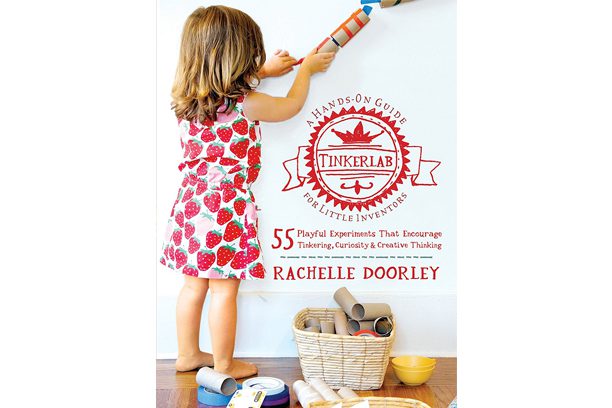
I recently stumbled on Tinkerlab: A Hands-on Guide for Little Inventors. It is a beautiful and thoughtful book chock full of ideas and not just for little inventors. Parents provide the tools but not necessarily the instructions. Furthermore, mistakes are part of the process. Here is a great book review by Rookie Moms too if you want to read more about it before you buy.
by admin | Dec 19, 2014 | Blog
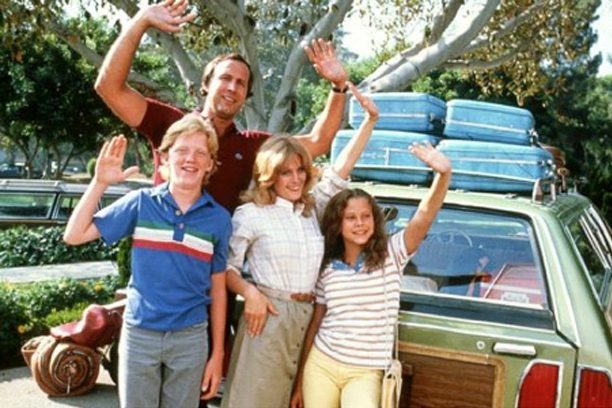
There is nothing like a family vacation to highlight your parenting flaws. As a parent coach, maybe I shouldn’t have any. But the truth is I stumble just like all parents. On a past holiday trip to Florida my husband and I got a chance to get intimate with our parenting missteps and how to improve a tough situation. I hope seeing where we went wrong might help you for the next time.
Here’s the scene: With the weather unseasonably cold we took the kids to Wannado City, a breathtaking indoor child city located outside of Ft. Lauderdale. We left my mother’s house without a hitch–got in the car on time, pulled out of the driveway, started rolling down the Florida Turnpike when …
“Daddy,” Casey says from the back seat, “can I have my song again?”
“Not right now,” her dad replies. “In a few minutes.”
“Pleeeease,” she retorts.
“No. not right now,” I interject. “We are sharing the radio right now.”
“But Mom, I want my song…”
“No”
“Mom” she now screams “I want my song NOW!”
(We try ignoring her for several minutes, to no avail)
“Please …”
“No …”
“But Mom …”
Finally, beaten down, we give in (Parenting mistake #1). Let the cycle begin …
We had just barely recovered from the Lion Country Safari fiasco the day before. Now it was more of the same. Upon reaching Wannado’s front door my 14-month-old son–a normally docile boy–decides to wail inconsolably for 40 minutes. He isn’t tired, hungry or wet. Just mad. Ugh. As my daughter excitedly tries to tell me where she wants to go first I snap at her to wait a minute while I try to comfort her brother (Parenting mistake #2).
Finally, with my son mellowed, we make it to the innards of Wannado. First Casey goes to the nail salon and polishes another little girl’s nails. Adorable. Quickly we head to the pretend modeling agency for Casey’s fashion show. When she prances on the runway we melt with pride. But that moment came and went.
Here’s where it all goes terribly wrong. Our lunch takes 40 minutes to arrive. My kids–and I–are starving. All the tables are filled. By the time we finally sit down, Casey glances dismissively at her grilled cheese (which she asked for) and snidely says, “I wanted pizza.” (Here comes mistake #3) I say “Casey, Eat it!” And the battle of wills begins.
Twenty-five minutes later the battle ends with Casey in hysterics in time out and my husband and I on the verge of a nervous breakdown. Tired of the rude responses, the intolerant behavior, the whining, the crying, and the tantrums we find ourselves in a pickle. Do we stay and let Casey think she can act horribly without consequences, or do we leave, suck up the $50 in admissions and drive the 60 minutes back home? So what do we do?
Suddenly I realized that I was so frustrated with the hassle that I wasn’t being particularly nice to my daughter. I wasn’t patient or listening. I wasn’t thoughtful of her needs. Realizing that I too had an impact on the outcome of the day, I took a deep breath and tried to salvage what was left. I told Casey that I was sorry that we were both upset. I made a deal with her to eat five bites of grilled cheese and a few fries (a compromise that allowed us both to save face.) I gave up on the hectic schedule we planned and focused on a few things that Casey wanted to do. Most helpful of all was my conscious decision to enjoy my children. It seems strange but I had to step back and focus on the positive instead of being dragged down by the negative.
I would have liked to believe that all the agony was my daughter’s fault. That the whining and backtalk caused all of our bad times. But maybe, to some degree, we were contributors to our daughter’s horrible behavior. And, if we helped cause it, maybe we could have the power to create good behavior, too.
Here’s what I recommend to help you on future vacations:
- Lower your expectations on vacation. Being away from your home environment and typical schedule can be very stressful. If you come to terms with this fact then the extra nagging and rough behavior is less frustrating.
- Plan less and enjoy more. Over-booking and trying to do too much just adds to the work of a vacation. The less-is-more policy allows for lots of fun but setting limits doesn’t overtax parents.
- Talk to your kids in advance and let them know what you expect for their behavior and what the consequences will be.
- Have a Plan B. When it looks like every day is a struggle and no one is enjoying the vacation, do something unusual. Go to a movie on a beautiful sunny day, hit the ice cream parlor on the ski slope, have a family pajama party in the tiny hotel room. Find ways to give in to the craziness and give yourself a break.

by admin | Dec 3, 2014 | Blog

Recently, after my son lost a race, a friend said to him, “You were beat by a girl.” I was stopped dead in my tracks. The man who said this is probably the least likely person to perpetuate outdated gender roles. He is a stay-at-home dad who does laundry and dishes and is a class parent. And yet, he still said it.
My shock at his words spewed out automatically. I looked at him and asked, “Did you just say he was beat by a girl?” Immediately my friend recanted. He himself didn’t know where that comment came from. It was probably a remnant from a childhood schoolyard. He felt badly and that was that.
But days and weeks later, I couldn’t forget it. Something truly bothered me.
My husband and I try to teach our kids to accept all kinds of people. We talk about discrimination and bias. We surround ourselves with people of color, different religions, successful women and men working outside the box. We show them that mommy can be a doctor (PhD) and dad can paint his toenails. However, it hit me that my kids are still getting discriminatory and gender stereotyped messages all the time. No matter how hard I try to open up their world of possibilities, someone is trying to close it.
This should not be a shock to me. I know there is plenty of gender bias and discrimination out there. I know that women are still paid less than men. I know that women are underrepresented in congress and at the top of most corporate jobs. I myself have had my share of discrimination at work.
When I was growing up, my sister and I listened to Marlo Thomas’ Free to Be You and Me until the record wore out. The lessons were profound: women could do anything. They could become doctors or engineers, and didn’t have to do housework. I was raised by a working mother who showed me I had no boundaries or glass ceilings. Free to Be You and Me also taught me that “real men” could cry, they could like dolls, and want to take care of children. Marlo Thomas, along with her friends, changed my life.
When my daughter was born I immediately bought her the video of Free to Be You and Me. We watched it for years. I still loved it but now it felt outdated. Did my daughter really need these lessons like I did?
Sadly, four decades later, maybe not as much as I had hoped has changed. Maybe all the same gender stereotypes are there, but they’re more insidious. You have to look harder, making them all the more challenging to attack.
This incident has made me realize that I have to be more explicit in my direction of my kids. It isn’t enough to be a good role model. It isn’t enough to have my daughter see successful women or enough for me to buy my son a kitchen to play with.
The conversation needs to happen and it needs to happen often. If I want to counteract all of the messages that my kids see every day, then I need regularly to talk about what gender roles are, why they are hurtful and empower my kids to shun them.
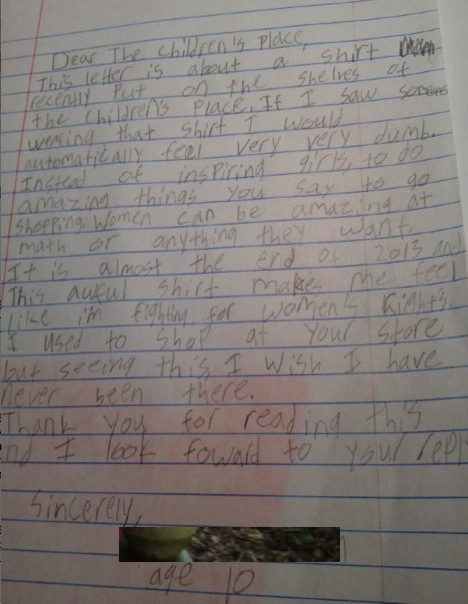
 Last year The Children’s Place produced a girls’ T-shirt that had a checklist. It read, “My best subjects are: shopping, music, dancing and math.” But only the first three subjects were checked. Math remained unchecked with the parenthetical saying “Well, nobody’s perfect.” It was horrifying. I took the opportunity to discuss it with my daughter and she got it. She was inspired to write a letter to The Children’s Place and she decided to no longer shop there. I was so proud. Eventually, as a result of the backlash, the store removed the shirt from the shelves. I thought, great, mission accomplished.
However, clearly we as a society cannot sit back and try to sporadically fight to change gender bias. Our work isn’t done yet. It won’t be done until no one even thinks girls can’t do math or that it is shameful for a boy to be beaten by a girl.
I do believe that we can accomplish this. I am hopeful because if I weren’t I would sink into despair. I will take this reminder to redouble my efforts. I hope you will, too.